Studentenblume (Tagetes): wann säen, pflanzen und blühen sehen
Aussaat-, Pflanz- und Blütezeiten für Ihr Klima, mit Anbautipps.
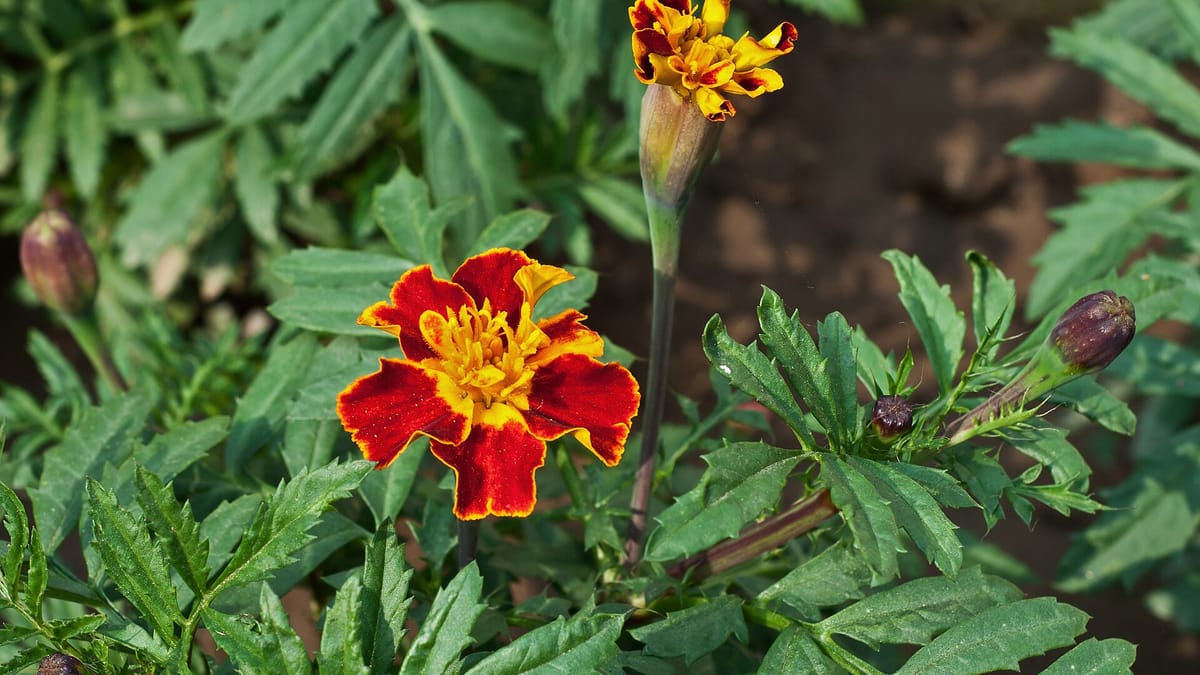
Foto: JDP90 (Joydeep), CC BY-SA 3.0 · Bild verkleinert
Wann säen und pflanzen in Ihrer Region
Durchschnittliche Termine, berechnet aus den Frostterminen der jeweiligen Klimazone. Für Ihre genauen Termine wählen Sie Ihren Wohnort.
| Klima | Unter Glas vorziehen | Ins Freiland säen | Auspflanzen | Blütezeit |
|---|---|---|---|---|
| Norddeutschland | 25. Februar – 7. Mai | 17. Mai – 14. Juni | 17. Mai – 14. Juni | 8. Juni – 13. Oktober |
| Ostdeutschland | 18. Februar – 30. April | 7. Mai – 4. Juni | 7. Mai – 4. Juni | 1. Juni – 14. Oktober |
| Westdeutschland und Rheintal | 8. Februar – 20. April | 1. Mai – 29. Mai | 1. Mai – 29. Mai | 22. Mai – 29. Oktober |
| Süddeutschland | 18. Februar – 30. April | 7. Mai – 4. Juni | 7. Mai – 4. Juni | 1. Juni – 18. Oktober |
| Mittelgebirge (um 700 m) | 6. März – 16. Mai | 8. Juni – 6. Juli | 8. Juni – 6. Juli | 17. Juni – 6. Oktober |
| Ostösterreich | 6. Februar – 18. April | 24. April – 22. Mai | 24. April – 22. Mai | 20. Mai – 27. Oktober |
| Österreichisches Alpenvorland | 13. Februar – 25. April | 30. April – 28. Mai | 30. April – 28. Mai | 27. Mai – 19. Oktober |
| Österreichische Alpen (um 1.000 m) | 18. März – 28. Mai | 3. Juni – 1. Juli | 3. Juni – 1. Juli | 29. Juni – 24. September |
| Schweizer Mittelland | 8. Februar – 20. April | 8. Mai – 5. Juni | 8. Mai – 5. Juni | 22. Mai – 30. Oktober |
| Tessin | 8. Januar – 20. März | 23. April – 21. Mai | 23. April – 21. Mai | 21. April – 24. November |
| Schweizer Alpen (um 1.000 m) | 11. März – 21. Mai | 1. Juni – 29. Juni | 1. Juni – 29. Juni | 22. Juni – 9. Oktober |
Anbau
- Lebenszyklus
- Einjährig (im selben Jahr gesät und in Blüte)
- Familie
- Asteraceae
- Botanischer Name
- Tagetes patula / Tagetes erecta
- Kältetoleranz
- Frostempfindlich
- Keimdauer
- 4–7 Tage
- Pflanzabstand
- 20–30 cm
Quellen
- The Old Farmer's Almanac — Companion planting chart
- Conboy N.J.A. et al. (2019). Companion planting with French marigolds protects tomato plants from glasshouse whiteflies through the emission of airborne limonene. PLOS ONE 14(3): e0213071
- Gerbeaud — Légumes bons voisins : bonnes et mauvaises associations
- Garden Organic — Companion or mixed planting
- Hooks C.R.R., Wang K.-H., Ploeg A., McSorley R. (2010). Using marigold (Tagetes spp.) as a cover crop to protect crops from plant-parasitic nematodes. Applied Soil Ecology 46: 307–320
- Jardiner Malin — Associations de légumes et fruits au potager
- Orto Da Coltivare — Orto sinergico: consociazioni e disposizione delle piante
- Orto Da Coltivare — Cosa piantare vicino ai pomodori
- RHS — Three ways to use companion planting
- Terre Vivante — Associer légumes et plantes pour protéger le potager
- University of Delaware Cooperative Extension — The New Companion Planting: Adding Diversity to the Garden
- University of Maryland Extension — Vegetable succession and companion planting
- RHS — Plant pages (hardiness ratings H1-H7)
- NC State Extension Gardener Handbook — 10. Herbaceous Ornamentals
- Jardiner Malin — flower and bulb fiches (same species; the lin, bleuet and lavatère pages are seed product pages, and lin is red flax)
- The Old Farmer's Almanac — flower growing guides (cosmos, calendula, marigolds, nasturtiums, sunflowers, sweet alyssum, zinnias, sweet peas, snapdragons, morning glories, poppies, bachelor's buttons, foxglove, pansies, hollyhocks, lupines, columbine, delphiniums, coneflowers, black-eyed Susans, yarrow, dianthus, tulips, daffodils, crocuses, hyacinths, snowdrops, dahlias, gladiolus, lilies)
- Johnny's Selected Seeds — Flower Growing Guide and key growing information pages
- Gerbeaud — flower and bulb fiches (cosmos, souci, capucine, tournesol, alysse, zinnia, nigelle de Damas, coquelicot, pavot de Californie, pois de senteur, muflier, reine-marguerite, ipomée, mauve annuelle, annuelles rustiques, giroflée ravenelle, digitale, myosotis, pensée, rose trémière, pâquerette, lupin, ancolie, delphinium, échinacée, rudbeckia, gaillarde, achillée, tulipe, crocus, jacinthe, perce-neige, muscari, ail d'ornement, dahlia, glaïeul, lis, bulbes d'automne, profondeur de plantation)