Duftwicke: wann säen, pflanzen und blühen sehen
Aussaat-, Pflanz- und Blütezeiten für Ihr Klima, mit Anbautipps.
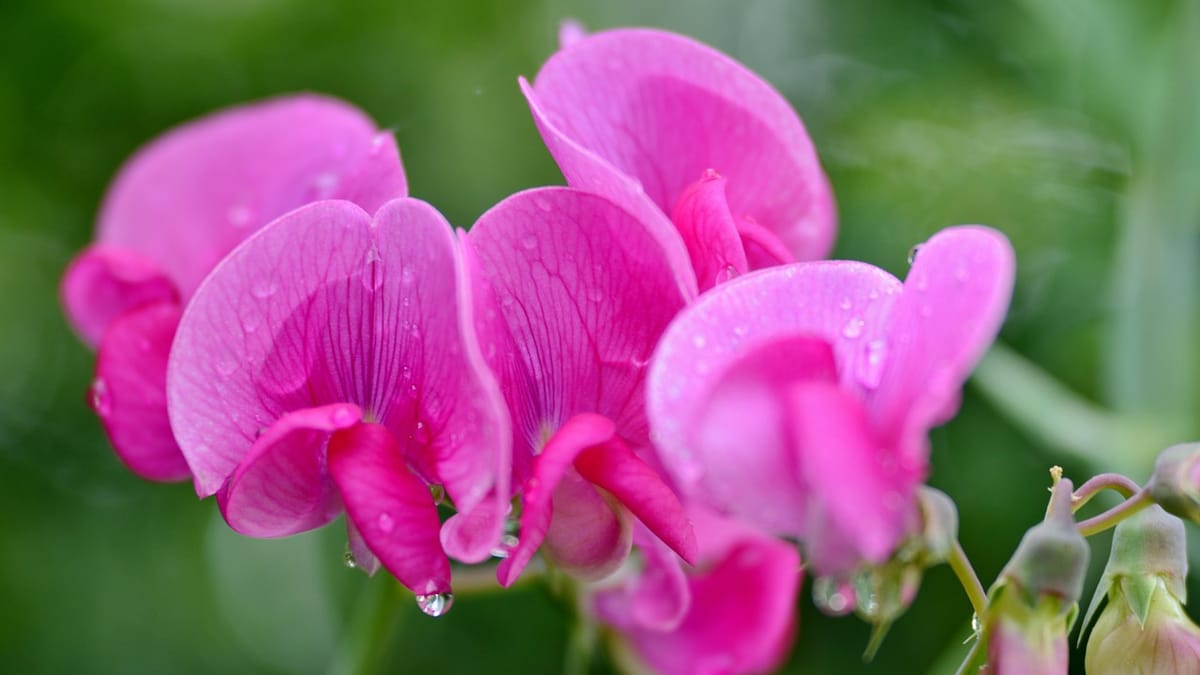
Foto: YvonneHuijbens, Pixabay Content License · Bild verkleinert
Wann säen und pflanzen in Ihrer Region
Durchschnittliche Termine, berechnet aus den Frostterminen der jeweiligen Klimazone. Für Ihre genauen Termine wählen Sie Ihren Wohnort.
| Klima | Unter Glas vorziehen | Ins Freiland säen | Auspflanzen | Blütezeit |
|---|---|---|---|---|
| Norddeutschland | 4. März – 7. Mai | 8. März – 7. Juni | 8. April – 7. Juni | 8. Juni – 13. Oktober |
| Ostdeutschland | 25. Februar – 30. April | 1. März – 31. Mai | 1. April – 31. Mai | 1. Juni – 14. Oktober |
| Westdeutschland und Rheintal | 15. Februar – 20. April | 19. Februar – 21. Mai | 22. März – 21. Mai | 22. Mai – 29. Oktober |
| Süddeutschland | 25. Februar – 30. April | 1. März – 31. Mai | 1. April – 31. Mai | 1. Juni – 18. Oktober |
| Mittelgebirge (um 700 m) | 13. März – 16. Mai | 17. März – 16. Juni | 17. April – 16. Juni | 17. Juni – 6. Oktober |
| Ostösterreich | 13. Februar – 18. April | 17. Februar – 19. Mai | 20. März – 19. Mai | 20. Mai – 27. Oktober |
| Österreichisches Alpenvorland | 20. Februar – 25. April | 24. Februar – 26. Mai | 27. März – 26. Mai | 27. Mai – 19. Oktober |
| Österreichische Alpen (um 1.000 m) | 25. März – 28. Mai | 29. März – 28. Juni | 29. April – 28. Juni | 29. Juni – 24. September |
| Schweizer Mittelland | 15. Februar – 20. April | 19. Februar – 21. Mai | 22. März – 21. Mai | 22. Mai – 30. Oktober |
| Tessin | 15. Januar – 20. März | 19. Januar – 20. April | 19. Februar – 20. April | 21. April – 24. November |
| Schweizer Alpen (um 1.000 m) | 18. März – 21. Mai | 22. März – 21. Juni | 22. April – 21. Juni | 22. Juni – 9. Oktober |
Anbau
- Lebenszyklus
- Einjährig (im selben Jahr gesät und in Blüte)
- Familie
- Fabaceae
- Botanischer Name
- Lathyrus odoratus
- Kältetoleranz
- Bedingt winterhart (verträgt keinen starken Frost)
- Keimdauer
- 7–15 Tage
- Pflanzabstand
- 20–30 cm
- Von der Aussaat bis zur Blüte
- 84–98 Tage
Quellen
- Gerbeaud — flower and bulb fiches (cosmos, souci, capucine, tournesol, alysse, zinnia, nigelle de Damas, coquelicot, pavot de Californie, pois de senteur, muflier, reine-marguerite, ipomée, mauve annuelle, annuelles rustiques, giroflée ravenelle, digitale, myosotis, pensée, rose trémière, pâquerette, lupin, ancolie, delphinium, échinacée, rudbeckia, gaillarde, achillée, tulipe, crocus, jacinthe, perce-neige, muscari, ail d'ornement, dahlia, glaïeul, lis, bulbes d'automne, profondeur de plantation)
- Jardiner Malin — flower and bulb fiches (same species; the lin, bleuet and lavatère pages are seed product pages, and lin is red flax)
- Royal Horticultural Society — growing guides (annuals and biennials: sowing in spring, sowing in autumn; sunflower, sweet pea, zinnia, lavatera, foxglove, lupin, hollyhock, delphinium, aquilegia, rudbeckia, achillea, tulip, daffodil, crocus, hyacinth, snowdrop, allium, dahlia, gladioli, lily, bulbs)
- RHS — Plant pages (hardiness ratings H1-H7)
- Plan de jardin - Jardin biologique — Semis du pois de senteur
- The Old Farmer's Almanac — flower growing guides (cosmos, calendula, marigolds, nasturtiums, sunflowers, sweet alyssum, zinnias, sweet peas, snapdragons, morning glories, poppies, bachelor's buttons, foxglove, pansies, hollyhocks, lupines, columbine, delphiniums, coneflowers, black-eyed Susans, yarrow, dianthus, tulips, daffodils, crocuses, hyacinths, snowdrops, dahlias, gladiolus, lilies)
- Johnny's Selected Seeds — Flower Growing Guide and key growing information pages
- Promesse de Fleurs — advice pages (jacinthe read in full; the others through search-result summaries only, the pages return their navigation shell)